Can Paying Blood Money Lead to Mohammadreza Moghadam’s Acquittal from Execution?

Ahwazi Centre for Human Rights
Can Paying Blood Money Lead to Mohammadreza Moghadam’s Acquittal from Execution?
A Look at the Systematic Deception by Security and Judicial Institutions Based in Ahwaz Against the Families of Arab Political Prisoners
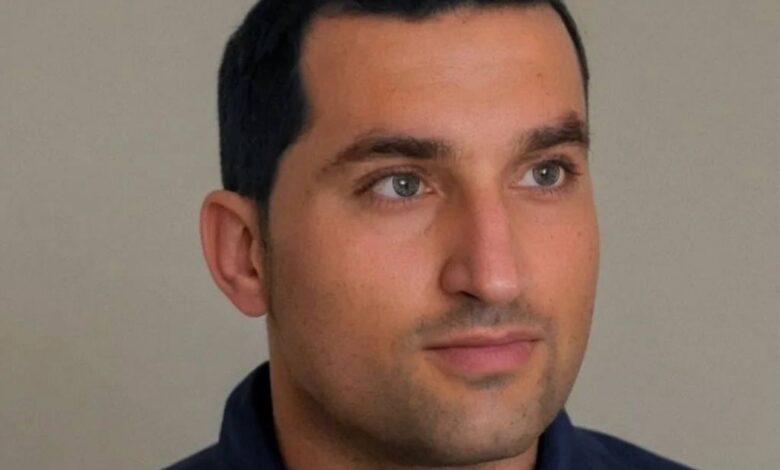
The case of six Arab political prisoners in Ahwaz, including Mohammadreza Moghadam, Ali Majdam, Moein Khanfari, Adnan Ghabishawi, Salem Mousavi, and Habib Darees, is under severe security pressure, torture, and psychological manipulation involving their families.
These prisoners, held in Sheiban Prison in Ahwaz under the direct control of security agencies affiliated with the central government, face serious charges including the killing of military personnel, rebellion (Baghi), and Moharebeh (waging war against God). Their confessions were obtained under torture and without respecting the fundamental rights of a fair trial, including the right to an independent lawyer and public trial.
In the latest developments, the family of Mohammadreza Moghadam has been contacted by individuals introduced as the legal heirs (Olia-ye Dam) demanding payment of five billion tomans in exchange for their consent. Meanwhile, the threat of issuance or execution of death sentences for all six prisoners remains.
The family of Mohammadreza Moghadam, who have lived for years under systemic discrimination, structural poverty, and repression, are now forced to turn to charities, human rights activists, social media, and the press for help in raising this heavy sum. These efforts reveal the difficult and desperate situation of a family compelled to seek public support in an unequal and harsh environment to save their son’s life.
These calls, which have a deceptive nature, place families in a difficult position: they must either raise a large sum or face the execution of their son. Even if the amount is paid, there is no guarantee that the death sentence will be halted.
This issue stems from two types of charges in the case: the charge of murder, which can be settled through Qisas (retribution) with the consent of the heirs, and the charges of rebellion (Baghi) and Moharebeh, which are considered security and public crimes that are not pardoned. Therefore, the government can issue and carry out the death sentence based on these security charges, even if the heirs have given their consent.
Therefore, the proposal to pay blood money not only fails to solve the problem but serves as a tool for financial pressure and exploitation of a family in a difficult situation. Such actions are part of an organized process to deceive the families of prisoners, exploit their desperation, and humiliate their human dignity. Previously, promises to halt executions in exchange for payment have been made, but families, after payment, have faced the execution of their loved ones and their loss.
Ahwazi Centre for Human Rights warns that executing these prisoners is a blatant violation of the right to life and a tool for the systematic suppression of the Arab youth in Ahwaz. Threats of execution and economic pressure on families are unethical and contrary to human rights principles.
This center calls on human rights organizations and international bodies to urgently investigate this case and take necessary measures to prevent the execution and protect the fundamental rights of these prisoners.
27 September 2025 / 5 Mehr 1404
Ahwazi Centre for Human Rights
https://acfh.info