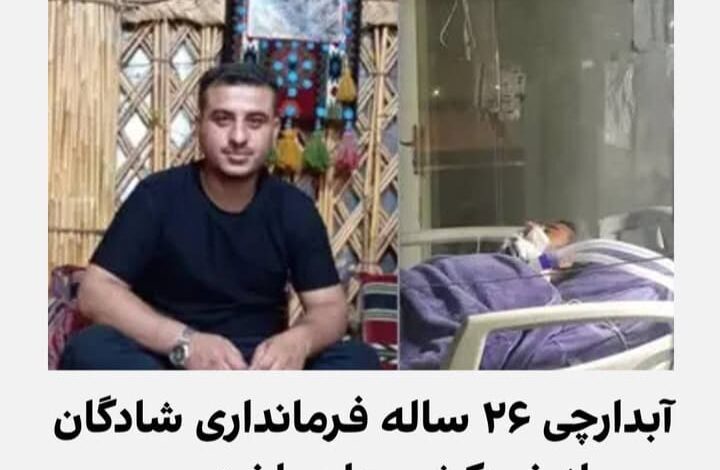
Death of Mohammad Ghraavi (Shavordi) in the City of Fallahiyeh (Shadegan), Ahwaz

Statement by the Ahwaz Human Rights Centre – UK regarding the Death of Mohammad Ghraavi (Shavordi) in the City of Fallahiyeh (Shadegan), Ahwaz
The Ahwaz Centre for Human Rights – UK expresses profound sorrow and deep concern over the death of Mohammad Ghraavi (Shavordi), son of Sabih, who, on 9 Shahrivar (31 August/1 September 2025), tragically self‑immolated in protest against severe economic pressures and systemic repression. This act is documented and unequivocally condemned.
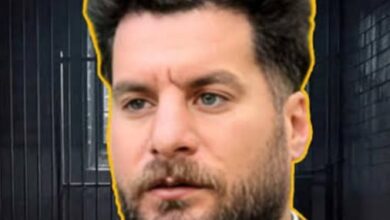
According to reliable reports, Mohammad Ghraavi endured persistent pressure aimed at evicting him from his workplace—pressures disproportionately affecting individuals without access to power structures or political patronage, especially in cities and areas where discriminatory policies are systematically enforced. A video he released shortly before his death poignantly captures a person in distress—deprived not only of institutional support but also driven by relentless pressure to the brink of collapse and self‑immolation.
The Ahwaz Human Rights Centre – UK emphasizes that the responsibility for this tragedy extends beyond local authorities. These officials are part of a broader system that receives and implements policies of repression and removal from higher levels. The incident reflects deliberate strategies orchestrated by central government and its affiliated institutions—including the elimination of independent actors, marginalization of those who dissent from power, tightening control, and destabilizing the livelihood of Arab communities throughout Ahwaz.
Discriminatory policies directed from the center and applied in cities and Arab-majority areas—via politicized appointments, sidelining dissenting individuals, and implementing structured economic and social pressures—have severely destabilized daily life. This destabilization has fostered psychological crises and tragedies like the death of Mohammad Ghraavi. Local and mid-level officials do not merely serve as links in this chain; they actively carry out these policies.
Statements released by officials after the incident—framing economic difficulties, social pressures, and administrative disarray as a vague ‘overall situation’—do not diminish accountability. In fact, they reveal a deeper lack of transparency and accountability. If conditions were indeed so critical, why were no warnings, information campaigns, or preemptive measures taken? Why is this only acknowledged as a “crisis” following Mohammad Ghraavi’s death?
The silence of responsible institutions before the tragedy, combined with their justifications afterward, reflects a deliberate policy of obscuring the role of decision‑making bodies—concealing the true origin of recurring crises across Arab communities throughout Ahwaz.
The Ahwaz Centre for Human Rights – UK warns that the continuation of this pattern will not only breed further tragedies, but constitutive violations of human dignity and fundamental human rights. We call for independent and transparent investigations into this case and similar incidents, documentation of systemic repression, and accountability for institutions that knowingly facilitated such events.
We further urge international bodies and human rights organizations to apply sustained pressure on the central government and its agencies, to halt discriminatory policies, and to ensure safeguards for psychological, economic, and social security in urban and Arab-majority areas of Ahwaz.
9 September 2025 / 18 Shahrivar 1404 Ahwaz Human Rights Center – UK
https://acfh.info